



DIABETES – SYMPTOMS, CAUSES AND TREATMENT
-
Author: BỆNH VIỆN ĐA KHOA QUỐC TẾ NAM SÀI GÒN
-
 10/11/2022
-
 16,155

Diabetes is a condition that happens when your blood sugar (glucose) is too high. It develops when your pancreas doesn’t make enough insulin or any at all.

DIABETES?
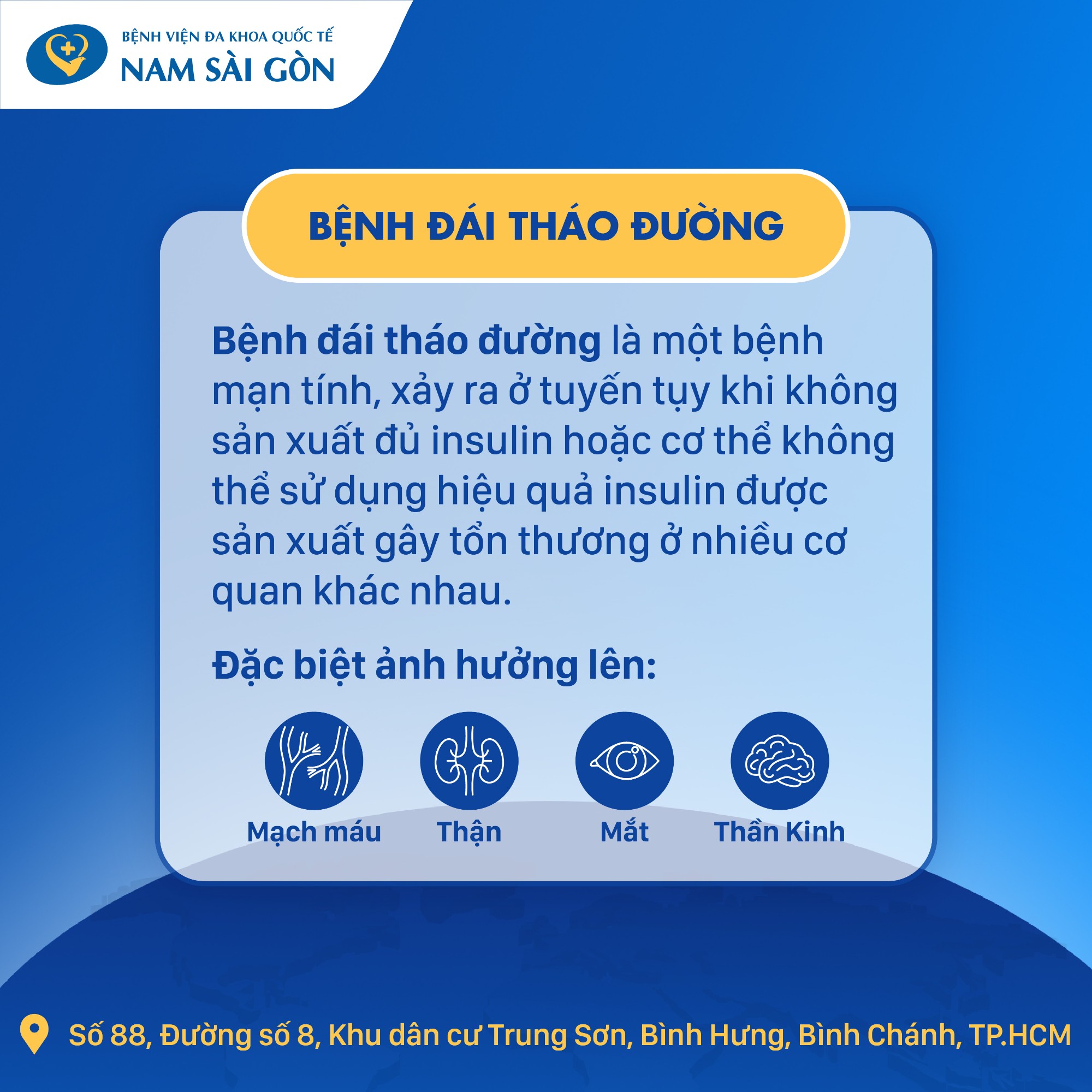
Diabetes mellitus (also known as diabetes) is a chronic disease that occurs when the pancreas does not produce enough insulin or when the body cannot effectively use the insulin it produces. The condition causes metabolic disorders due to prolonged elevated blood glucose levels, leading to disturbances in carbohydrate, protein, and lipid metabolism, and resulting in damage to multiple organs—particularly the heart, blood vessels, kidneys, eyes, and nervous system.
Causes of Diabetes
Under normal conditions, when we consume carbohydrates (such as bread, rice, or pasta), the body breaks them down into sugar (glucose). Once glucose enters the bloodstream, it needs assistance to reach its final destination where it can be used. This assistance comes from insulin, which acts as a “key.” At this point, the pancreas releases the hormone insulin, enabling cells to absorb blood glucose and convert it into energy for the body’s daily activities.
When diabetes develops, it means that:
-
The pancreas no longer produces enough insulin or does not produce insulin at all; or
-
The pancreas produces insulin, but the body’s cells become resistant to it and do not respond properly, preventing glucose from being absorbed.
As a result, glucose gradually accumulates in the bloodstream, leading to persistently high blood sugar levels and increasing the risk of serious complications.

Common Types of Diabetes
According to the World Health Organization (WHO) classification, there are four main types of diabetes: type 1 diabetes, type 2 diabetes, gestational diabetes, and prediabetes.
Type 1 Diabetes
Type 1 diabetes (previously known as insulin-dependent diabetes) is characterized by an absolute deficiency of insulin production, requiring daily insulin administration. This condition occurs because the pancreas is unable to produce insulin due to autoimmune destruction of the pancreatic beta cells. Type 1 diabetes most commonly develops in children and adolescents, and recent data show an increasing incidence among individuals under the age of 30.
Type 2 Diabetes
Type 2 diabetes (previously known as non–insulin-dependent diabetes) results from the body’s ineffective use of insulin. More than 95% of people with diabetes have type 2 diabetes. This form of diabetes is largely associated with excess body weight and physical inactivity.
Type 2 diabetes often progresses silently but is responsible for a significant number of deaths, ranking third among non-communicable diseases in terms of mortality. Individuals with a family history of diabetes are at higher risk of developing the disease. In addition, people with unhealthy diets, insufficient physical activity, and poor lifestyle habits are also at increased risk.
When the body is unable to adequately suppress fat breakdown, levels of free fatty acids in the bloodstream increase. This reduces insulin-stimulated glucose transport and glycogen synthesis in muscles. As a result, adipose tissue releases harmful factors such as tumor necrosis factor-alpha (TNF-α), interleukin-6 (IL-6), leptin, and resistin, which negatively affect glucose metabolism.
Gestational Diabetes
This type of diabetes develops in some women during pregnancy. Gestational diabetes is diagnosed in women during the second or third trimester of pregnancy who had no prior evidence of diabetes. The condition usually resolves after childbirth. However, women who develop gestational diabetes—and their babies—have a higher risk of developing type 2 diabetes later in life.
Prediabetes
Prediabetes is a stage that precedes type 2 diabetes. Impaired glucose tolerance (IGT) and impaired fasting glucose (IFG) are intermediate conditions in the transition from normal glucose regulation to diabetes. Blood glucose levels in prediabetes are higher than normal but not high enough to meet the diagnostic criteria for type 2 diabetes.
Symptoms of Diabetes
The classic “four excesses” commonly appear when diabetes becomes symptomatic:
-
Frequent urination with increased urine volume
-
Persistent fatigue and general weakness
-
Dry mouth, excessive thirst, and itchy skin
-
Increased appetite accompanied by weight loss
Additional symptoms may include:
-
Blurred or reduced vision
-
Frequent infections and slow wound healing
However, when the “four excesses” syndrome appears, the disease is often already in an advanced stage. Therefore, regular health check-ups are essential for early detection and timely management of diabetes.

Who should be screened for diabetes?
Individuals with a body mass index (BMI) ≥ 23 kg/m², or a body weight greater than 120% of ideal body weight, and one or more of the following risk factors should undergo diabetes screening:
-
Physical inactivity
-
A family history of diabetes (parents or siblings)
-
Hypertension (systolic blood pressure ≥ 140 mmHg and/or diastolic blood pressure ≥ 90 mmHg, or current use of antihypertensive medication)
-
Low HDL cholesterol levels (< 35 mg/dL [0.9 mmol/L]) and/or high triglyceride levels (≥ 250 mg/dL [2.82 mmol/L])
-
Abdominal obesity: waist circumference ≥ 90 cm in men and ≥ 80 cm in women
-
Polycystic ovary syndrome (PCOS) in women
-
A history of gestational diabetes
-
HbA1c ≥ 5.7% (39 mmol/mol), impaired fasting glucose, or impaired glucose tolerance on previous testing
-
Clinical signs of insulin resistance (such as obesity or acanthosis nigricans)
-
A history of atherosclerotic cardiovascular disease
For individuals without the above risk factors or symptoms, diabetes screening should begin at 45 years of age.
To proactively manage diabetes, regular health check-ups are strongly recommended. Nam Sai Gon International General Hospital offers comprehensive health screening packages tailored to different age groups, genders, and individual needs, with reasonable and transparent pricing policies.
Nam Sai Gon International General Hospital
No. 88, Street No. 8, Trung Son Residential Area, Binh Hung Commune, Ho Chi Minh City.
Hotline: 18006767
info@nih.com.vn
Last updated: 15:32 15/01/2026