



URETHROLASIA OF LARGE BENIGN PROSTATE TUMOR WITH BIPOLAR KNIFE FOR 72-YEAR-OLD MAN
-
Author: BỆNH VIỆN ĐA KHOA QUỐC TẾ NAM SÀI GÒN
-
 23/11/2022
-
 348
348


Urinary Retention, Frequent Urination, and Hematuria Over a Long Period — Warning Signs of an Enlarged Prostate Tumor
After experiencing persistent urinary retention, frequent urination, and blood in the urine for an extended period, Mr. L.T (72 years old) sought medical examination at Nam Sai Gon International General Hospital. During evaluation, Dr. Le Van Hieu Nhan (Specialist Level II) from the General Surgery Department discovered that although the patient’s prostate tumor was benign, it had grown to an extremely large size.
It was noted that the patient had undergone medical treatment for the past two years, but it was unsuccessful. Therefore, he was indicated for surgical removal (enucleation) of the enlarged prostate, as the tumor was severely affecting his health and daily life.

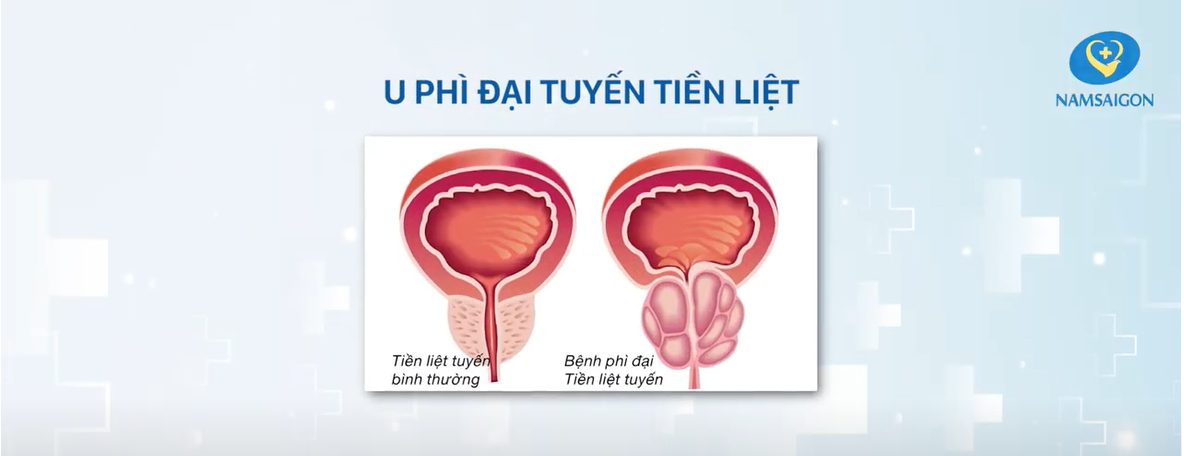
According to statistics from the World Health Organization, over 50% of men aged 60–70 have benign prostatic hyperplasia (BPH), and this rate increases to 88% among men aged 80.
Benign prostatic hyperplasia (BPH)—also known as benign enlargement of the prostate—is extremely common in men worldwide, including in Vietnam. The older a man becomes, the higher the likelihood of developing BPH.
Due to the benign overgrowth of prostate tissue, the enlarged gland compresses surrounding structures, affecting the prostatic urethra, bladder neck, bladder, and ureters. Progressive urinary retention may occur, and if left untreated, it can eventually lead to kidney failure.
Dr. Le Van Hieu Nhan (Specialist Level II) shared the following upon evaluating patient L.T:
Mr. T.’s prostate tumor had enlarged to 80 grams, the result of long-term urinary retention and years of straining during urination. In addition, he experienced recurrent hematuria because the enlarged prostate compressed the urethra, leading to urinary obstruction and causing blood to appear in the urine. If not treated promptly, such conditions can lead to dangerous complications and may even become life-threatening.
Before coming to Nam Sai Gon International General Hospital, the patient had visited many medical facilities and was diagnosed with a significantly enlarged prostate. He had been advised to undergo open surgery to remove the gland. However, due to fear of potential complications associated with open surgery—such as heavy bleeding, infection, and prolonged recovery—Mr. T. chose to continue medical treatment for two years.
Transurethral Bipolar Enucleation for Large Prostate Tumors
Through examinations, tests, and MRI scans, no signs of prostate cancer were found. However, given Mr. T.’s advanced age and history of hypertension, traditional open surgery would have involved a long operative time and significant physiological stress—posing high risks and requiring an extended recovery period.
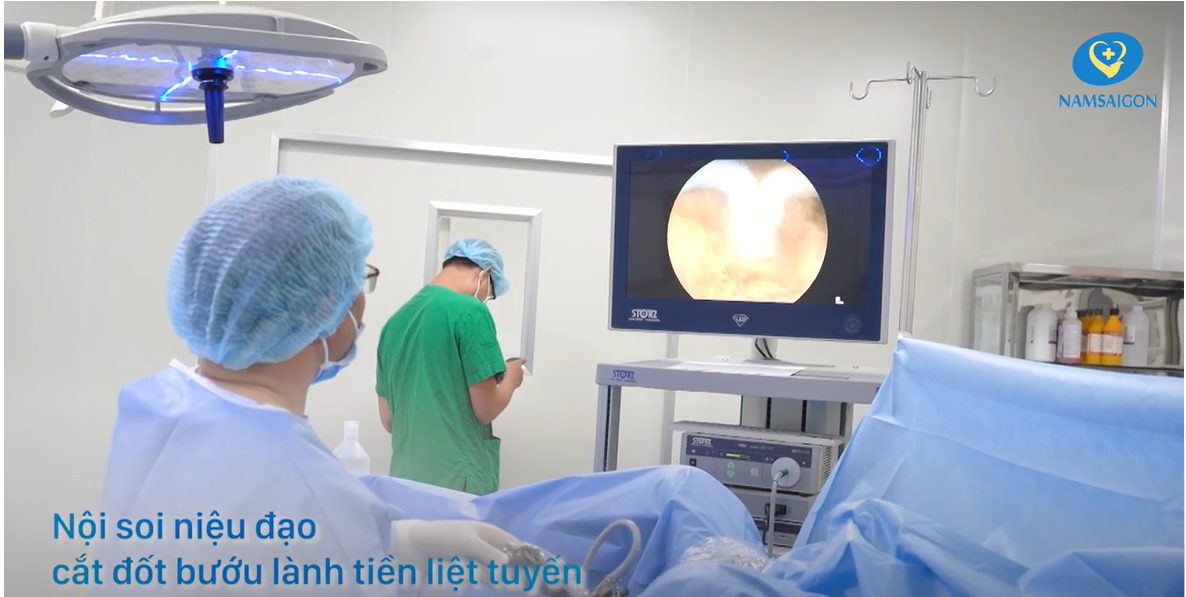
Therefore, after multidisciplinary consultation, the General Surgery team decided to use transurethral bipolar enucleation of the enlarged prostate tumor, a modern technique based on the established procedure of transurethral prostate resection.
Compared with the monopolar electrode, the bipolar technique for prostate resection offers significant advantages. Because the procedure is performed in an isotonic fluid environment, it eliminates the risk of TUR syndrome seen with monopolar systems. This allows surgeons to extend the resection time for large tumors without requiring open surgery.
The technique enables the removal of a large tumor volume, reducing the likelihood of recurrence. The bipolar electrode also achieves better hemostasis and has a lower risk of complications such as bladder neck stenosis or urethral stricture compared with monopolar electrodes. Furthermore, the bipolar current is confined to the bladder, preventing skin burns or bladder perforation—complications sometimes associated with monopolar devices.
In cases where a patient has difficulty urinating due to a high bladder neck or an enlarged middle lobe of the prostate, the surgeon can simply use the bipolar electrode to vaporize the bladder neck tissue and middle lobe, rather than removing the entire prostate. This reduces surgical time, blood loss, and the risk of future bladder neck stenosis.
The minimally invasive endoscopic procedure using this new technique was performed by
Dr. Le Van Hieu Nhan (Specialist Level II) – General Surgery Department. The patient underwent the operation under spinal anesthesia and remained fully conscious throughout. A cystoscope was inserted through the urethra, and bipolar energy was used to rapidly resect the enlarged prostatic tissue while simultaneously vaporizing cellular structures and coagulating blood vessels.
After 1 hour and 30 minutes, the patient had a urinary catheter placed to irrigate the bladder with saline, preventing blood clots from forming and obstructing the catheter.

Favorable Recovery After Surgery and Early Discharge
Following the procedure, the patient was able to eat and drink normally six hours after surgery, resume nearly normal activities on the first postoperative day, had the urinary catheter removed on the second day, and regained completely normal urination. He was discharged after three days of treatment.
This method offers significant advantages compared with traditional open surgery, such as:
-
Minimally invasive technique with reduced bleeding risk
-
Less postoperative pain
-
Shorter operative time
-
Better postoperative monitoring
-
Increased safety for the patient
-
Shortened hospital stay and faster recovery
This surgical approach is particularly effective for elderly patients and those with a high risk of bleeding.
In addition to removing prostate and bladder tumors, the bipolar electrode can also vaporize fibrotic tissue in cases of urethral strictures, bladder neck stenosis, and ureteral strictures, Dr. Hieu Nhan added.
It is known that this new endoscopic technique is not yet widely available and is currently performed only at medical facilities equipped with advanced technology and staffed by highly skilled surgeons. With the growing trend of minimally invasive interventions that deliver high-quality treatment outcomes, Nam Sai Gon International General Hospital will continue to implement this technique routinely and on a broader scale in the management of benign prostatic hyperplasia.
This will allow patients to benefit from high-tech medical services, reduce treatment costs, and enhance public confidence in the quality of domestic healthcare.
Nam Sai Gon International General Hospital
No. 88, Street No. 8, Trung Son Residential Area, Binh Hung Commune, Ho Chi Minh City.
Hotline: 18006767
info@nih.com.vn
Last updated: 11:17 05/12/2025