



MULTILEVEL LUMBAR DISC HERNIATION TREATMENT USING THE O ARM SYSTEM AND 3D NAVIGATION TECHNOLOGY
-
Author: BỆNH VIỆN ĐA KHOA QUỐC TẾ NAM SÀI GÒN
-
 11/05/2023
-
 2,791
2,791


The O-arm system combined with 3D navigation has helped reduce surgical time by half compared to traditional methods, while avoiding open surgery, minimizing blood loss, and preventing damage to nerve roots, the spinal cord, and blood vessels.
MULTILEVEL LUMBAR DISC HERNIATION TREATMENT USING THE O ARM SYSTEM AND 3D NAVIGATION TECHNOLOGY
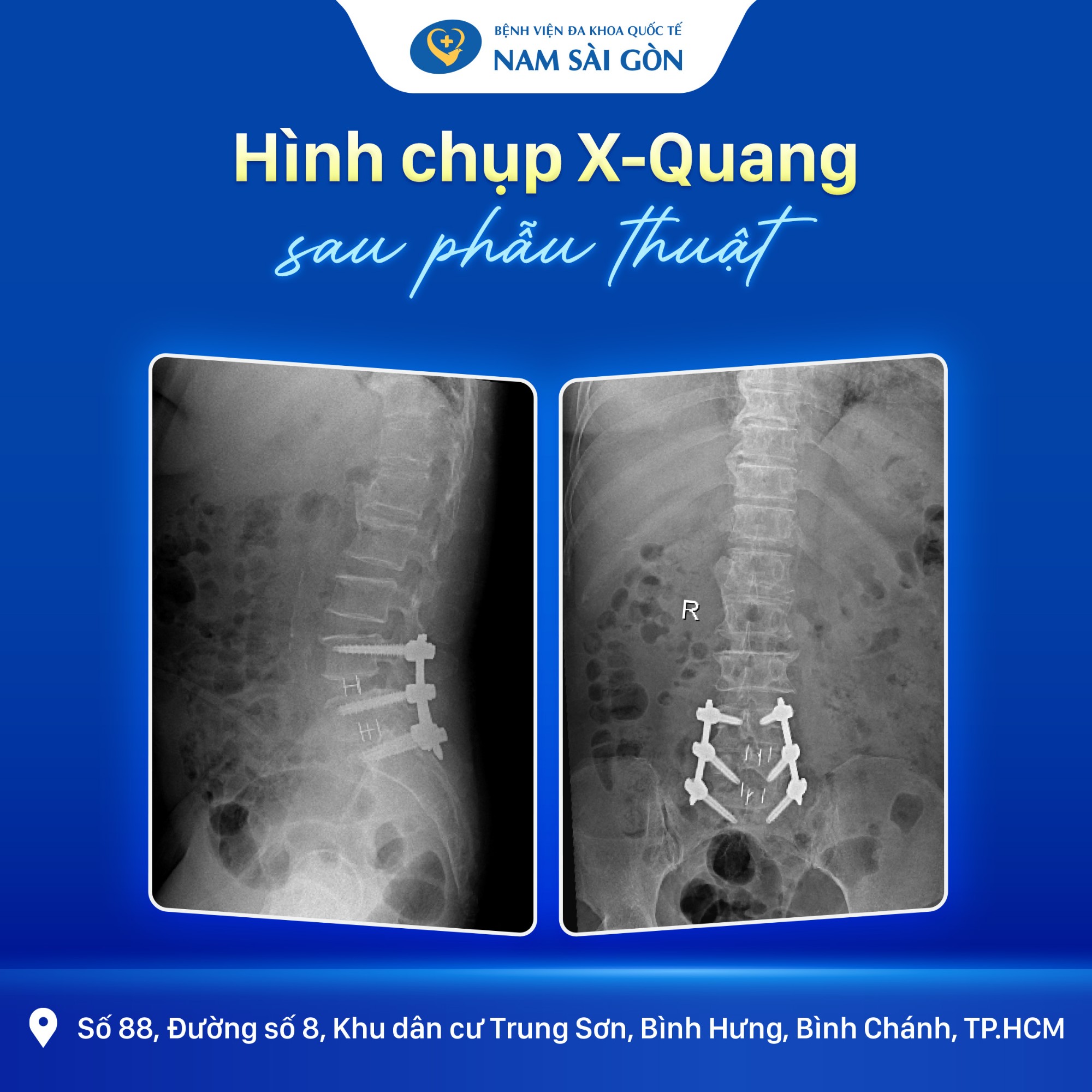
Instead of undergoing a large open surgery as before, 66-year-old patient H. was treated at the Neurosurgery & Spine Department of Nam Sai Gon International General Hospital using minimally invasive surgery with the O-arm system and 3D navigation technology to address multi-level disc herniation at L4–L5 and L5–S1.
Her condition began with persistent lower back pain that gradually radiated down both legs. For two years, Mrs. H. silently endured the discomfort until walking became increasingly difficult, prompting her to seek medical treatment.
According to Dr. DO ANH VU, MMed, Specialist Level II, Neurosurgery & Spine Department, who directly performed the surgery, MRI scans showed that the patient had multi-level disc herniation at L4–L5 and L5–S1, compressing the nerve roots and causing severe spinal canal stenosis. Despite conservative treatment, her symptoms did not improve and significantly affected her quality of life.
For cases like Mrs. H., to eliminate pain and restore normal mobility and daily function, a minimally invasive percutaneous lumbar disc replacement and spinal fixation is required.
Most hospitals in Ho Chi Minh City still perform traditional open surgery using the C-arm system for disc replacement and spinal fixation. However, the C-arm only provides two-dimensional (2D) images, which do not offer a comprehensive view of the patient’s spine.
As a result, surgeons must rely heavily on their knowledge of anatomical variations—such as the trajectory, disc implant placement, and screw size—to avoid injuring nerve roots, the spinal cord, or major blood vessels. In addition, the C-arm system exposes both patients and operating room staff to radiation.
To support surgeons and overcome the limitations of the C-arm, Nam Sai Gon International General Hospital has invested in an O-arm system synchronized with an intraoperative navigation system, providing high-resolution 3D imaging that is more comprehensive and accurate. This significantly enhances surgical precision and ensures greater safety for patients.
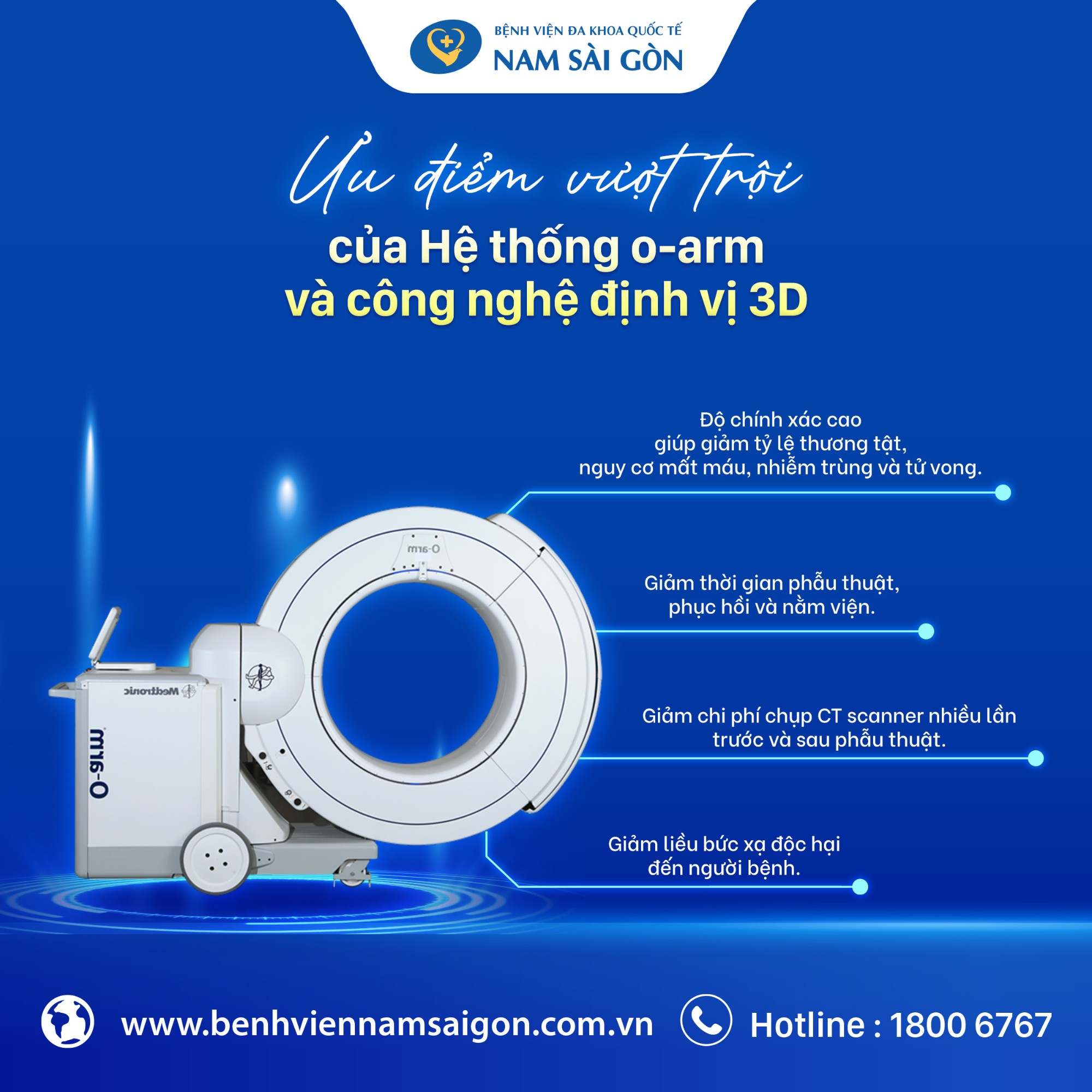
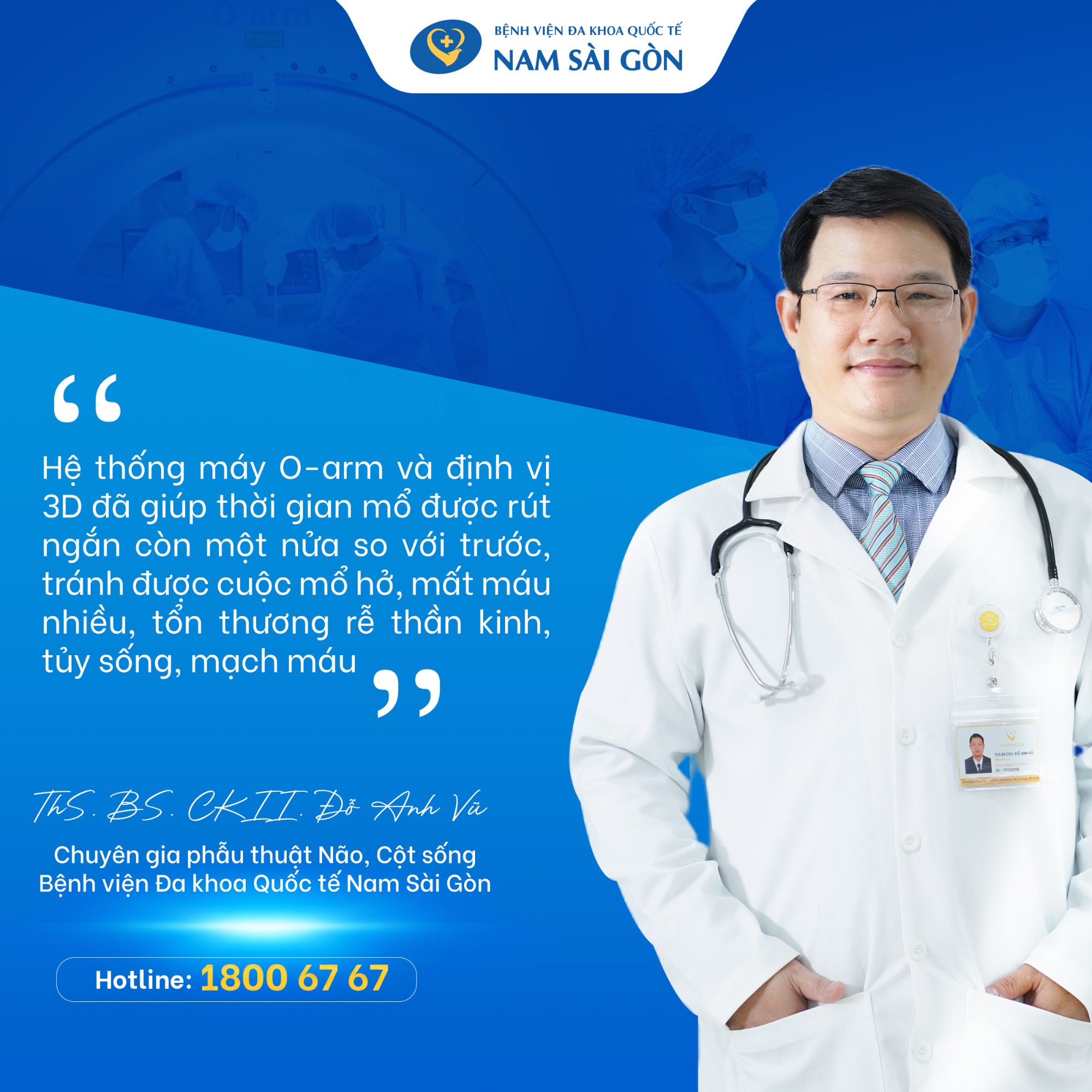
“The O-arm system combined with 3D navigation has helped reduce the surgical time by half compared to before, while avoiding open surgery, significant blood loss, and injuries to nerve roots, the spinal cord, and blood vessels. After the procedure, the patient experienced complete pain relief and felt much lighter in both legs. By the afternoon of the following day, Mrs. H. was able to sit up, and by the second day, she could already walk,” Dr. Vu added.
Nam Sai Gon International General Hospital
No. 88, Street No. 8, Trung Son Residential Area, Binh Hung Commune, Ho Chi Minh City.
Hotline: 18006767
info@nih.com.vn
Last updated: 10:52 05/12/2025