



DENGUE FEVER – SYMPTOMS, CAUSES & TREATMENT
-
Author: BỆNH VIỆN ĐA KHOA QUỐC TẾ NAM SÀI GÒN
-
 25/06/2024
-
 7,363
7,363

Dengue (DENG-gey) fever is a mosquito-borne illness that occurs in tropical and subtropical areas of the world.

DENGUE FEVER?
Dengue fever, commonly referred to as dengue, is an acute infectious disease transmitted from an infected person to a healthy individual through mosquito bites. Mild cases of dengue fever can be managed at home; however, in more severe cases, hospitalization is required for treatment.
Dengue fever presents with diverse clinical manifestations and an unpredictable course, ranging from mild to severe. The disease typically has a sudden onset and progresses through three stages: the febrile phase, the critical phase, and the recovery phase.
Warning Signs of Dengue Fever Requiring Hospitalization
Dr. Nguyen Lam Vinh Phuc, Specialist Level I Physician, Deputy Head of the Department of General Internal Medicine at Nam Sai Gon International General Hospital, stated that when infected with dengue fever, some patients may experience several days of persistent high fever (39–40°C) followed by defervescence and gradual recovery. However, in other cases, the disease may progress to a more severe form and become life-threatening if not managed promptly.
When dengue fever is treated at home, it is essential to closely monitor for warning signs—even after the fever has subsided.
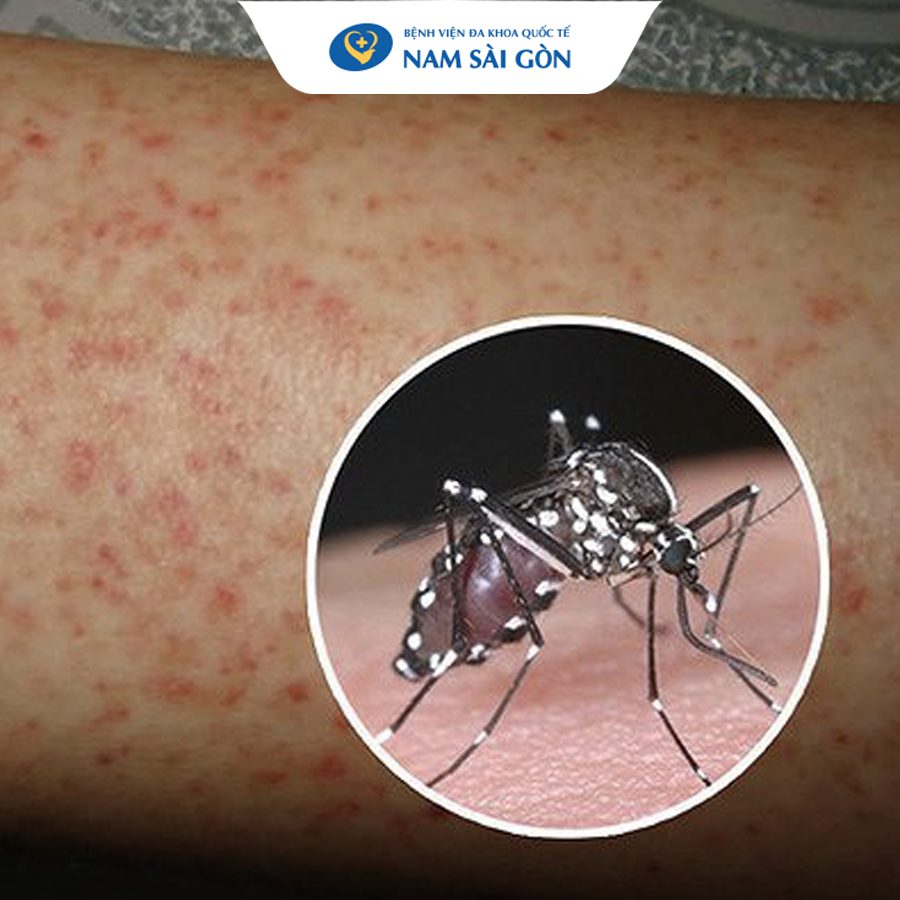
Serious Complications of Dengue Fever
Dengue fever has an unpredictable course, and currently there is no specific antiviral treatment or widely available vaccine for prevention. During the critical phase, the disease may present with the following manifestations:
-
Severe abdominal pain
-
Restlessness, lethargy, drowsiness, or altered level of consciousness
-
Pain in the right upper abdomen (due to liver enlargement)
-
Persistent vomiting
-
Significant plasma leakage, which can lead to shock, characterized by restlessness, irritability, lethargy, cold extremities, rapid and weak pulse, narrowed pulse pressure, or hypotension
-
Hemorrhagic manifestations, including:
-
Subcutaneous bleeding, presenting as scattered petechiae or purpura, commonly seen on the front of the lower legs, inner arms, abdomen, thighs, flanks, or as bruising
-
Mucosal bleeding such as bleeding gums, nosebleeds, hematemesis, melena or bloody stools, and vaginal bleeding
-
In severe cases, patients may develop organ failure, including liver failure, kidney failure, cardiac or pulmonary failure, impaired consciousness (dengue encephalopathy), or myocarditis.
Patients with dengue fever require close monitoring and should be promptly taken to a medical facility when severe warning signs appear.

Pay Attention to Persistent High Fever (39–40°C)
Dengue Fever Cases Requiring Hospitalization for Monitoring and Treatment
In addition, Dr. Nguyen Lam Vinh Phuc, Specialist Level I Physician, Deputy Head of the Department of General Internal Medicine at Nam Sai Gon International General Hospital, provided several important notes regarding special cases that should be hospitalized for close monitoring and treatment when diagnosed with dengue fever, including:
-
Living alone
-
Residing far from a medical facility, making timely hospital admission difficult if the condition worsens
-
Family members are unable to provide regular monitoring
-
Infants
-
Overweight or obese individuals
-
Pregnant women
-
Elderly patients (≥ 60 years old)
-
Patients with underlying chronic conditions (kidney, heart, liver diseases; poorly controlled asthma or COPD; diabetes mellitus; hemolytic anemia)
Prevention of Dengue Fever
The most effective way to prevent dengue fever is to eliminate mosquitoes and their larvae (Aedes larvae) and to protect against mosquito bites.
To prevent mosquito bites, the following measures are recommended:
-
Wear long-sleeved clothing
-
Sleep under mosquito nets, including during the daytime
-
Use mosquito control products such as insecticide sprays, mosquito coils, mosquito repellent creams, and electric mosquito swatters
-
Receive dengue vaccination in accordance with the guidelines of the Ministry of Health (as soon as the vaccine becomes available)
Nam Sai Gon International General Hospital accepts National Health Insurance and Private Health Insurance, ensuring convenient access to healthcare services for patients.
Nam Sai Gon International General Hospital
No. 88, Street No. 8, Trung Son Residential Area, Binh Hung Commune, Ho Chi Minh City.
Hotline: 18006767
info@nih.com.vn
Last updated: 10:48 17/01/2026