



SUCCESSFUL TREATMENT OF 2 CASES OF CEREBRAL HEMORRHAGE WITHOUT REQUIRING MAJOR SKULL OPEN
-
Author: BỆNH VIỆN ĐA KHOA QUỐC TẾ NAM SÀI GÒN
-
 25/04/2023
-
 145
145


In recent years, since the implementation of 3D Navigation technology in surgery, the Neurosurgery & Spine Department at Nam Sai Gon International General Hospital has successfully treated and saved many patients suffering from hemorrhagic stroke, significantly reducing life-threatening risks and the likelihood of permanent disability.
In addition to traditional craniotomy, minimally invasive hematoma drainage combined with fibrinolytic therapy is one of the world’s most advanced techniques for treating spontaneous intracerebral hemorrhage. This approach offers numerous advantages, such as avoiding large skull openings, reducing intracranial pressure, relieving ventricular compression, lowering mortality rates, and improving patient recovery outcomes.
Recently, Nam Sai Gon International General Hospital received two consecutive cases of basal ganglia hemorrhagic stroke. Both surgeries were performed by Dr. DO ANH VU, MMed, Specialist Level II from the Neurosurgery & Spine Department—one of the leading experts in O-arm and Navigation technology in Southern Vietnam.
SUCCESSFUL TREATMENT OF TWO CASES OF CEREBRAL HEMORRHAGE WITHOUT THE NEED FOR MAJOR CRANIOTOMY
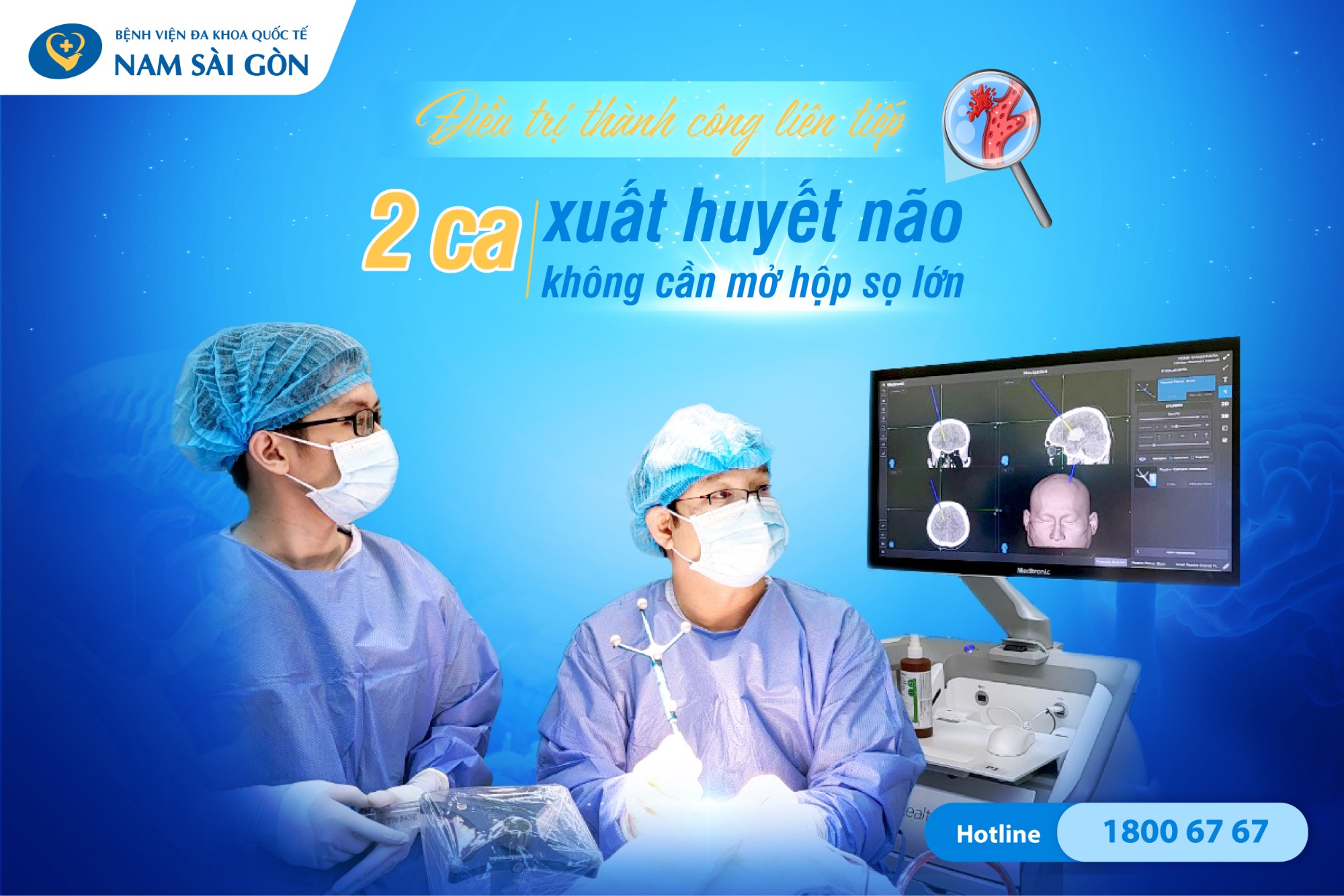 Successful Consecutive Treatment of Two Cases of Cerebral Hemorrhage Without the Need for Major Craniotomy
The first case recently treated with this advanced technique was Ms. S.S (42 years old, Cambodia), who was brought to the emergency department in a condition of left-sided hemiplegia, severe headache, high blood pressure, and a Glasgow Coma Scale score of 12. Her family reported that three days before admission, she suddenly developed a severe headache of unknown cause. She had shown no prior abnormal symptoms, and it was unclear whether she had experienced a fall.
Recognizing the importance of the “golden window” in treating hemorrhagic stroke, Dr. Do Anh Vu (Specialist Level II, MSc) immediately performed initial emergency management and ordered a brain CT scan. The CT results revealed a right hemispheric intracerebral hematoma, surrounding cerebral edema, and compression of adjacent structures.
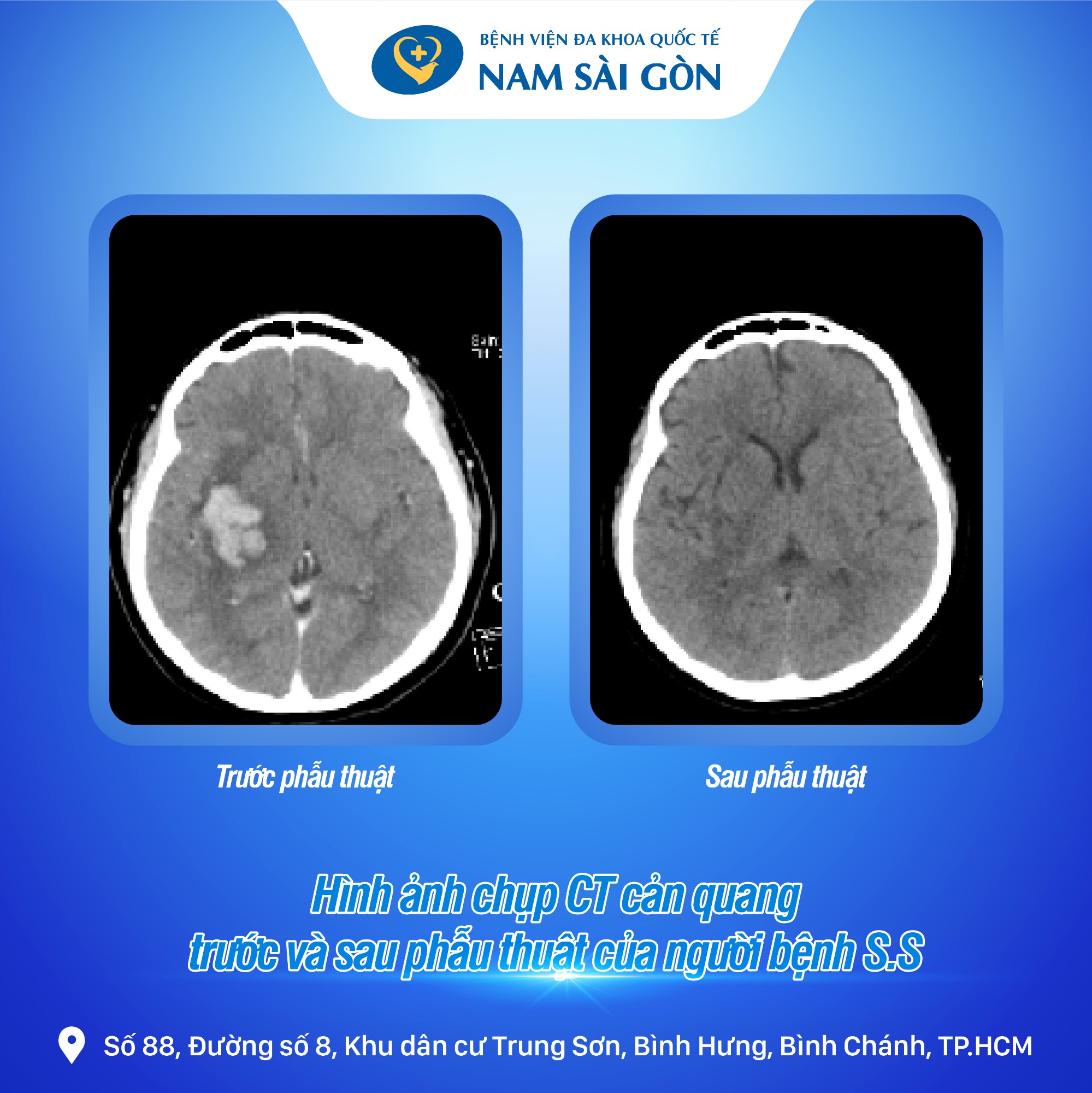 Contrast-Enhanced CT Images Before and After Surgery
Similarly, in the second case, the patient was Mr. H.P (40 years old, Cambodia), who was admitted in a condition of slurred speech. He had been hospitalized at a local facility for one week without improvement before being transferred to the Emergency Department of Nam Sai Gon International General Hospital.
Upon examination, the patient was conscious but slow to respond, hemodynamically stable, suffering from headache, and had right-sided hemiplegia. A non-contrast brain CT scan showed a left basal ganglia intracerebral hematoma, compressing the ipsilateral ventricle, with a potential risk of subfalcine herniation.
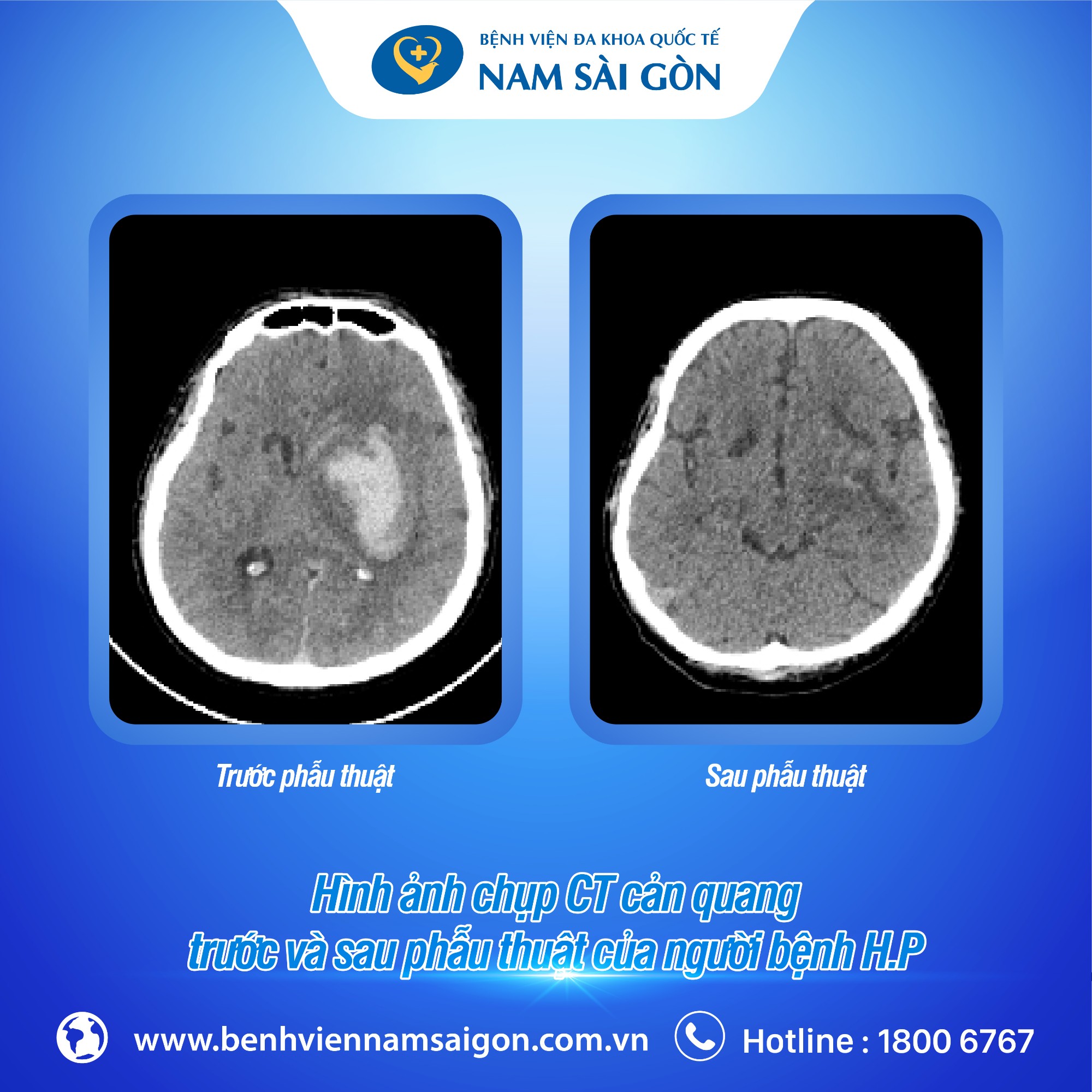 Contrast-Enhanced CT Images Before and After Surgery
Given the severity of the patient’s condition, the medical team conducted an urgent consultation and immediately proceeded with hematoma drainage surgery. The neurosurgeons selected a minimally invasive technique, placing a catheter directly into the hematoma and combining it with fibrinolytic therapy delivered through the catheter.
The incision was very small—approximately 3 cm—with a single burr hole drilled into the skull, the dura opened, and the catheter inserted into the hematoma using 3D Navigation guidance. Fibrinolytic medication was then administered into the hematoma to facilitate continuous drainage.
Performing this technique requires surgeons with high-level expertise and extensive experience, as well as a hospital equipped with a 3D Navigation system. Thanks to the dedicated efforts of the entire surgical team, both procedures were completed smoothly and successfully.
After three days of drainage and a follow-up CT scan, the remaining hematoma was minimal. Both patients were fully conscious, able to speak, showed no signs of facial paralysis, and had gradually improving strength in their limbs.
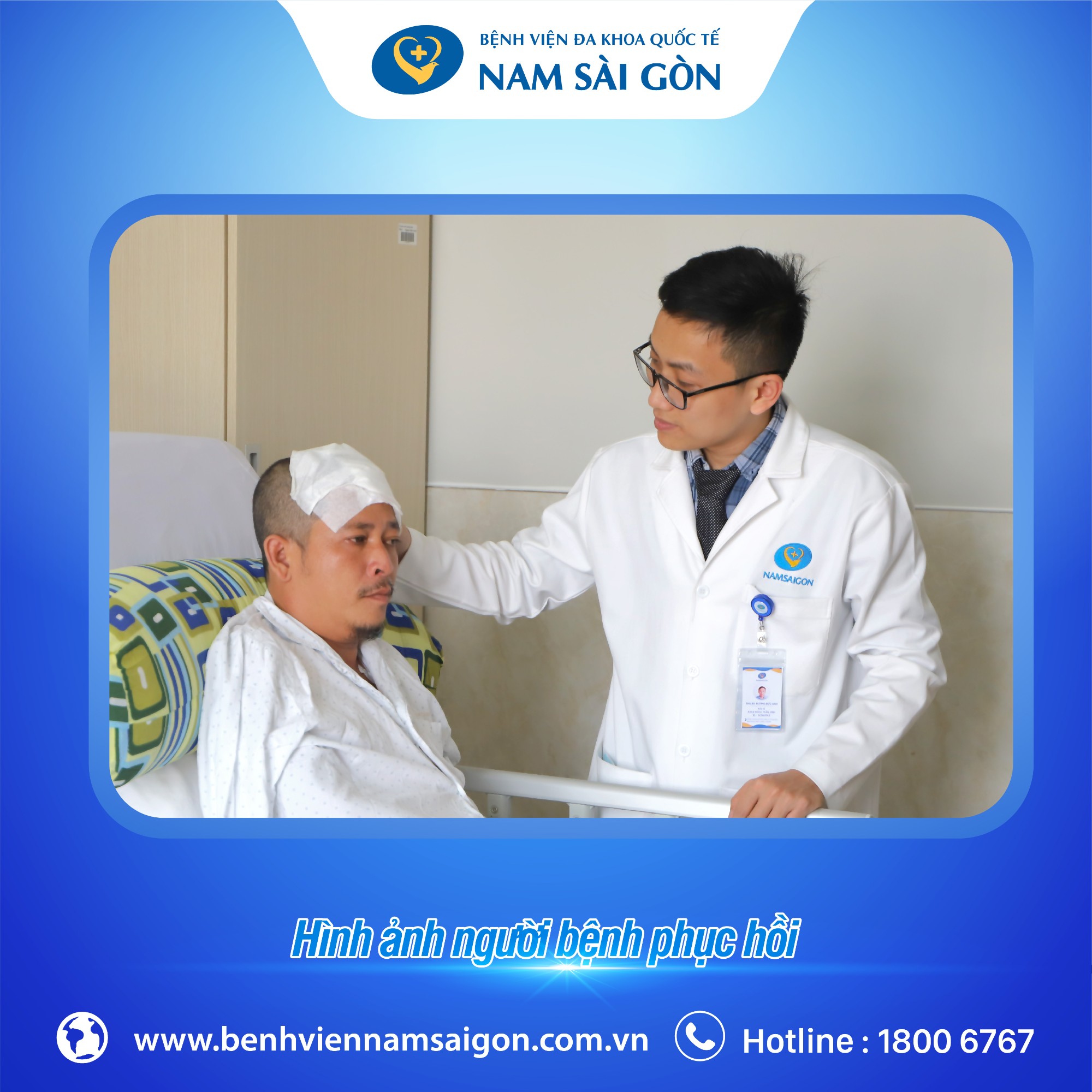 Patient Recovery Images
Sharing about the new technique in treating cerebral hemorrhage, Dr. DO ANH VU, MMed, Specialist Level II explained:
“Hematoma drainage under Navigation guidance is a modern technique with many advantages compared to the traditional open craniotomy. This minimally invasive method applies advanced technology to treatment, yielding excellent results for patients with intracerebral and intraventricular hemorrhage. It helps them avoid major surgery and the many serious complications associated with it.”
With the support of the 3D Navigation system, surgeons can easily visualize the hematoma through 3D reconstructed imaging, precisely determine the burr hole location, and accurately control the pathway and angle for catheter placement and fibrinolytic infusion. This ensures optimal safety and control throughout the procedure.
If a family member exhibits symptoms such as sudden severe headache, vomiting, dizziness, slurred speech, or weakness on one side of the body, they should be taken to the nearest medical facility immediately for timely evaluation and intervention.
Nam Sai Gon International General Hospital
No. 88, Street No. 8, Trung Son Residential Area, Binh Hung Commune, Ho Chi Minh City.
Hotline: 18006767
info@nih.com.vn
Last updated: 10:57 05/12/2025