



MANY CASES OF HEADACHES AND BLURRED VISION UNEXPECTEDLY TURN OUT TO BE BRAIN TUMORS UPON EXAMINATION
-
Author: BỆNH VIỆN ĐA KHOA QUỐC TẾ NAM SÀI GÒN
-
 25/03/2023
-
 216
216


Aiming toward minimally invasive neurosurgical techniques that reduce complications in brain tumor removal and other neurological conditions, Nam Sai Gon International General Hospital has successfully applied the endoscopic endonasal approach for pituitary tumor removal, achieving excellent results.
Recently, the Neurosurgery & Spine Department at Nam Sai Gon International General Hospital has received and treated multiple patients who presented with symptoms such as blurred vision, prolonged amenorrhea, or unexpected infertility—symptoms that may seem unrelated to neurological diseases, yet all were found to have pituitary tumors.
The first case involved Mr. N.M.S (64 years old, District 7), who was admitted with headache, decreased vision, and long-standing double vision, for which prolonged medication had provided no relief. According to his family, he had been suffering from headaches for many months, and over the past two weeks, his vision had worsened significantly. Noticing that his symptoms were getting progressively worse, he came to Nam Sai Gon International General Hospital for examination. After clinical evaluation, laboratory tests, and a brain MRI scan, results revealed a pituitary tumor with hemorrhage.
The next case involved Ms. V.N.C.G (34 years old, Dong Nai), who had experienced prolonged amenorrhea six months before admission. She also reported breast fullness and occasional milk-like discharge, and despite being married for several years, she had been unable to conceive. After undergoing examinations— including brain MRI and blood hormone tests—doctors diagnosed a prolactin-secreting pituitary adenoma. Excess prolactin (a hormone normally produced only during pregnancy or breastfeeding) was identified as the cause of her amenorrhea and infertility.
Another case involved Mr. H.M (48 years old, Bac Lieu), who presented with headaches and was found to have a recurrent pituitary tumor, five years after his initial surgery. Early surgical intervention was required.
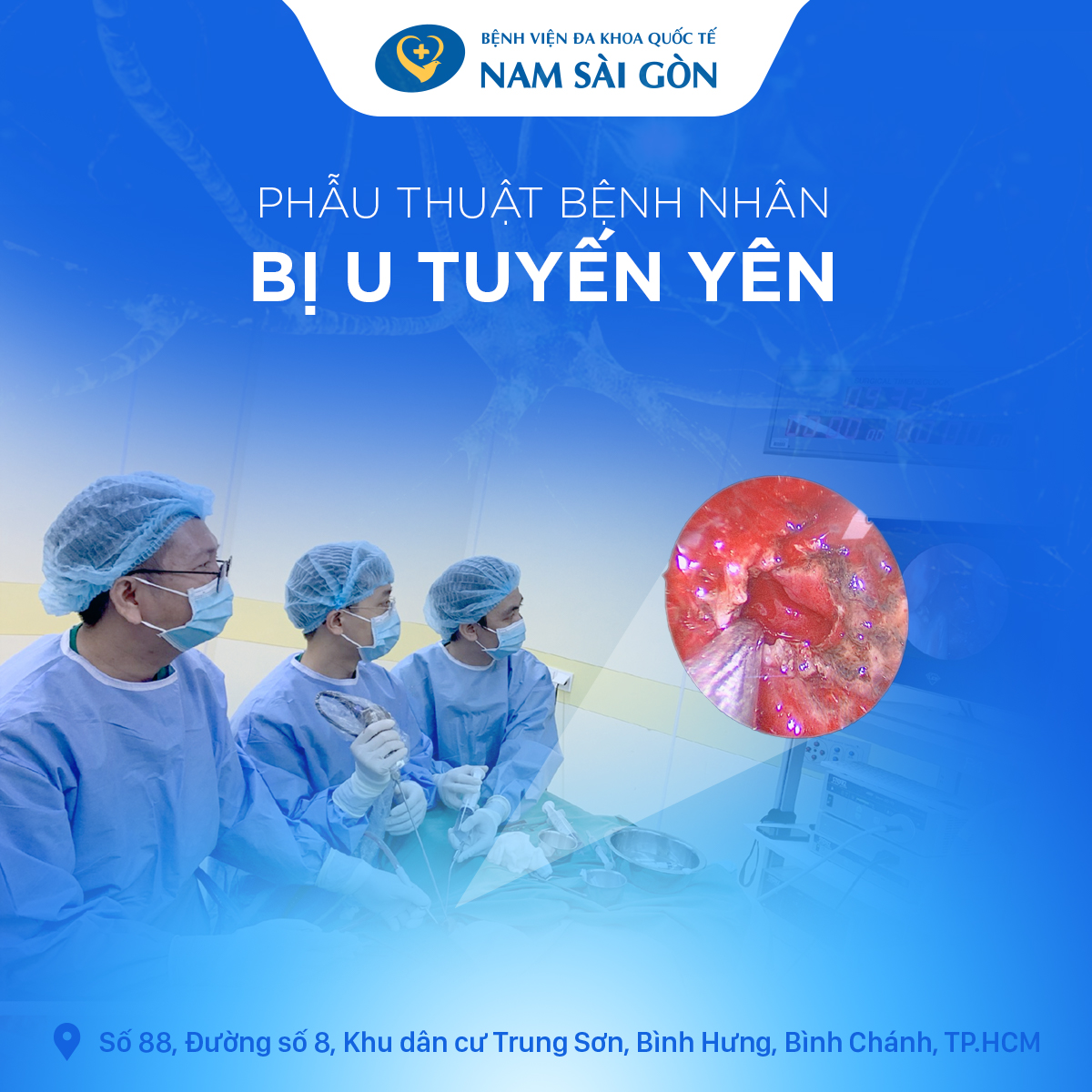
Pituitary Tumor Surgery
After multidisciplinary consultation, the neurosurgeons selected the endoscopic transsphenoidal approach—a minimally invasive technique to remove the pituitary tumor through the sphenoid sinus, assisted by 3D navigation. This modern and advanced method offers numerous advantages.
In the past, patients were often hesitant to undergo pituitary tumor surgery because it required opening the skull and retracting the brain to reach the pituitary gland. With the new endoscopic technique, surgeons access the tumor through the patient’s nostrils, navigate into the sphenoid sinus, and remove the entire pituitary tumor without leaving any surgical scar. Recovery is rapid, and the procedure provides a very high level of safety.
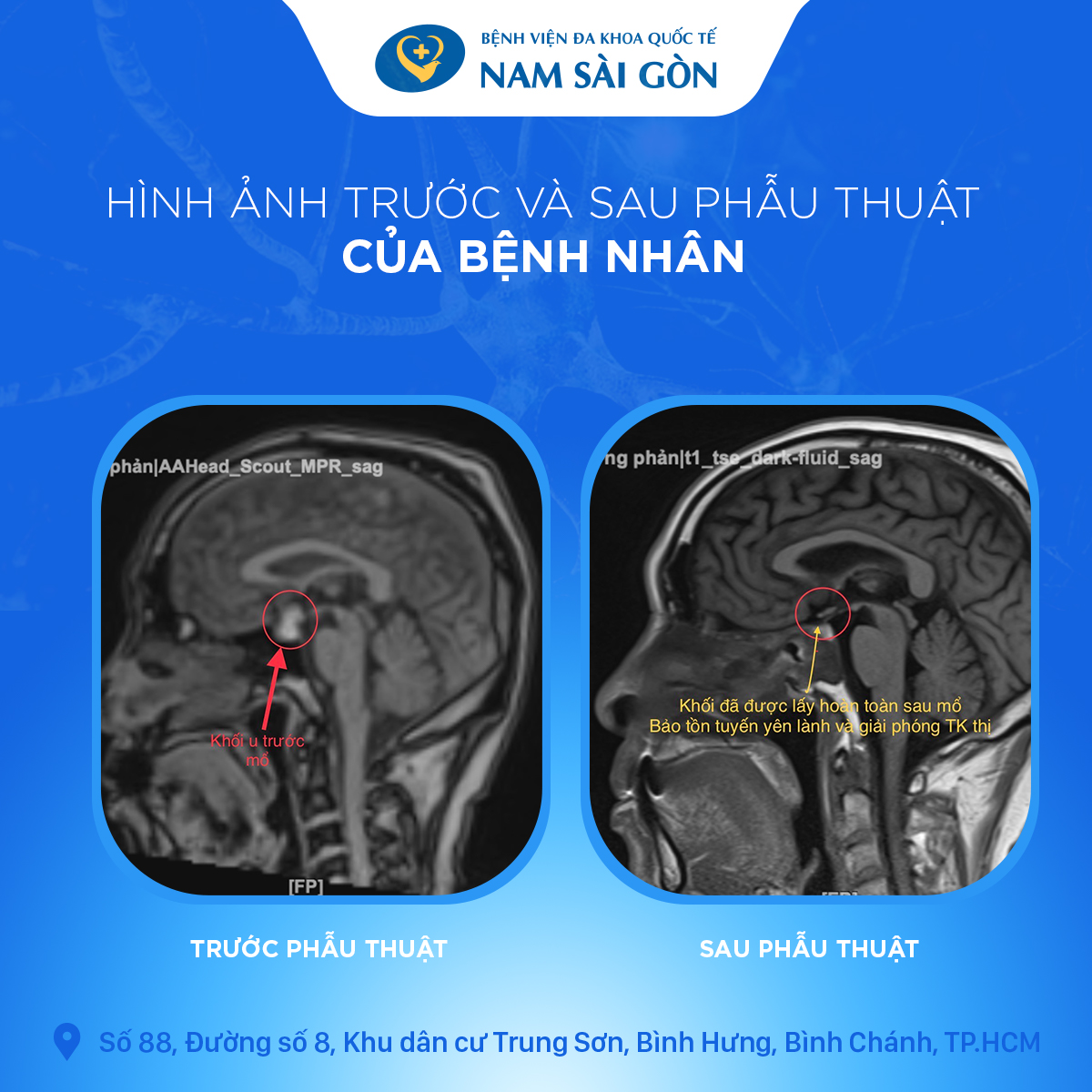
Before and After Surgery for a Patient With a Pituitary Tumor
Dr. Le Kham Tuan, PhD – Head of the Neurosurgery & Spine Department, shared:
“Pituitary tumors are benign growths originating from pituitary gland cells. They can occur at any age and may cause a variety of symptoms, such as nipple discharge, irregular menstruation, infertility, decreased libido in men, blurred vision, double vision, headaches, nausea, vomiting, or even coma. Early diagnosis and treatment offer the best outcomes.”
“In the past, many cranial surgeries required large skull openings. However, with modern technology, surgeons now only need a 2–3 cm opening in the skull—or can even access the tumor through natural orifices like the nostrils—to remove large brain tumors.
The endoscopic transsphenoidal approach provides numerous benefits: it enables quick, accurate, and complete tumor removal while preserving the anatomy and physiological function of the nasal sinuses, shortening hospital stay, and reducing treatment costs for patients.”
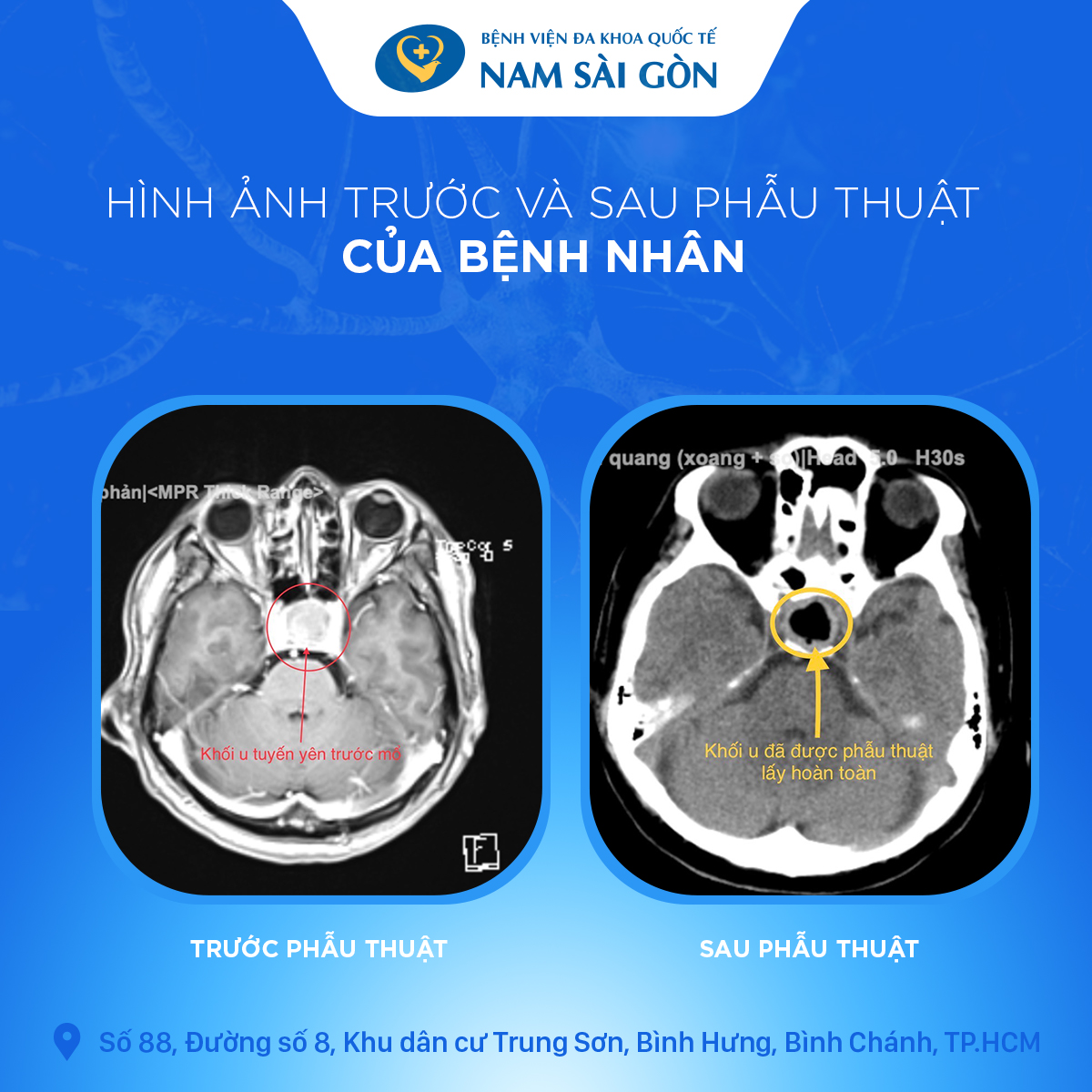
Before and After Surgery for Pituitary Tumor Patients
Thanks to thorough preparation, the neurosurgical team — including Dr. Le Kham Tuan, PhD; Dr. DO ANH VU, MMed, Specialist Level II; and Dr. Duong Duc Anh (MMed) — successfully performed the surgeries in a short operative time. The tumors were completely removed without damaging brain structures, blood vessels, or cranial nerves, and no incision scars were left on the scalp.
Just one day after surgery, the patients were fully awake, responsive, and experienced significant improvement in vision. After five days of treatment, their conditions had stabilized, and they were able to be discharged home.
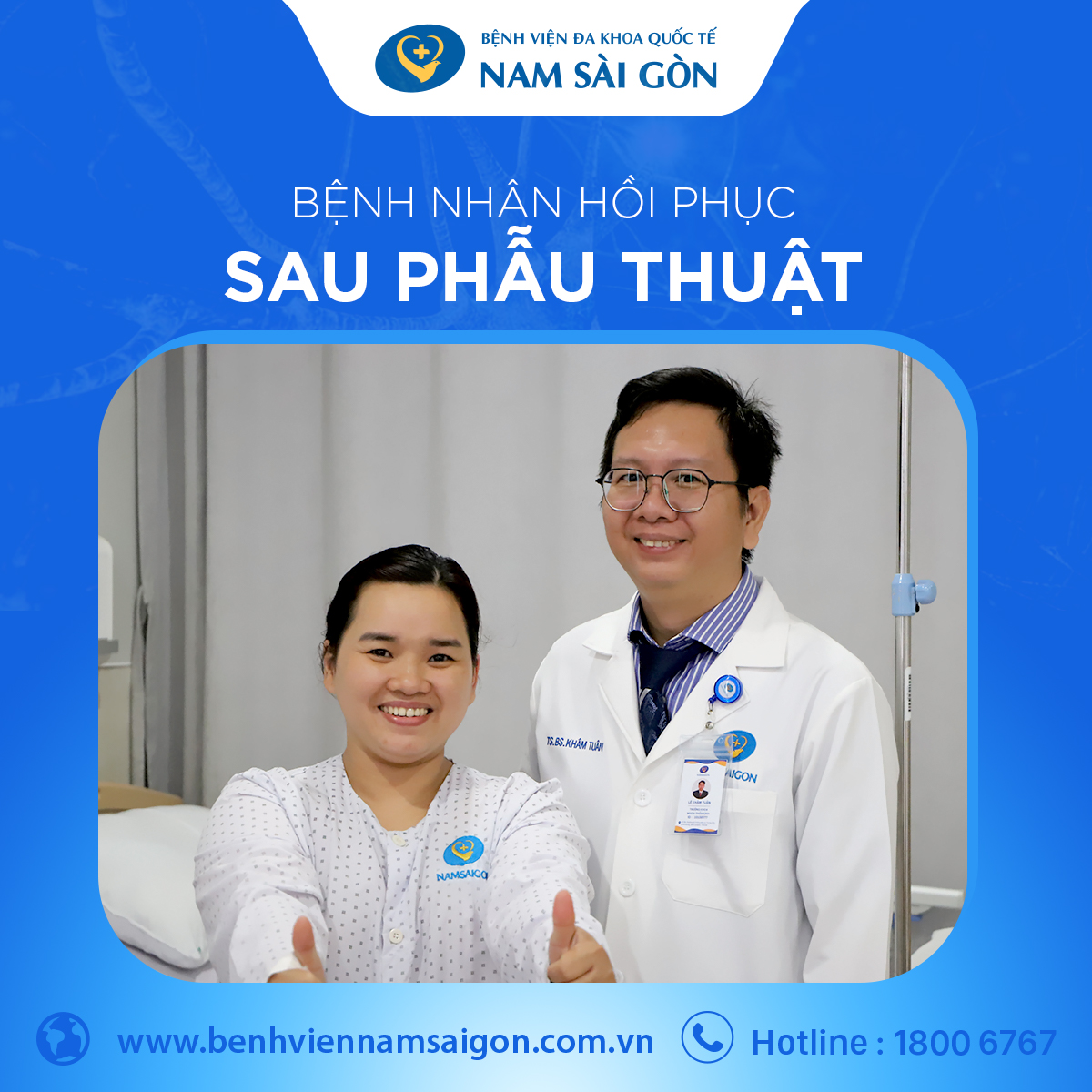
Patient Recovery After Pituitary Tumor Surgery
With this minimally invasive surgical technique, the tumor is removed completely with minimal bleeding and minimal tissue damage. The procedure time is shorter, leaves no visible scars, and significantly reduces postoperative pain. Recovery time and hospital stay are also much shorter compared to traditional craniotomy. Most importantly, because the surgery does not involve manipulating other brain areas, the risk of complications is almost eliminated.
When experiencing unusual symptoms such as blurred vision, headaches, or amenorrhea, patients should not ignore them. Early medical consultation is essential to identify the cause and receive appropriate treatment.
Nam Sai Gon International General Hospital
No. 88, Street No. 8, Trung Son Residential Area, Binh Hung Commune, Ho Chi Minh City.
Hotline: 18006767
info@nih.com.vn
Last updated: 11:08 05/12/2025