



SAVING A FOOT WITH A SEVERED ARTERY AFTER A SERIOUS ACCIDENT BY A LAWN MOWER
-
Author: BỆNH VIỆN ĐA KHOA QUỐC TẾ NAM SÀI GÒN
-
 13/08/2025
-
 437
437


Not only did the doctors at Nam Sai Gon International General Hospital save the patient’s foot after the accident, but they also promptly detected a silently progressing kidney injury that could have been life-threatening.
Saving patients from the Grim Reaper
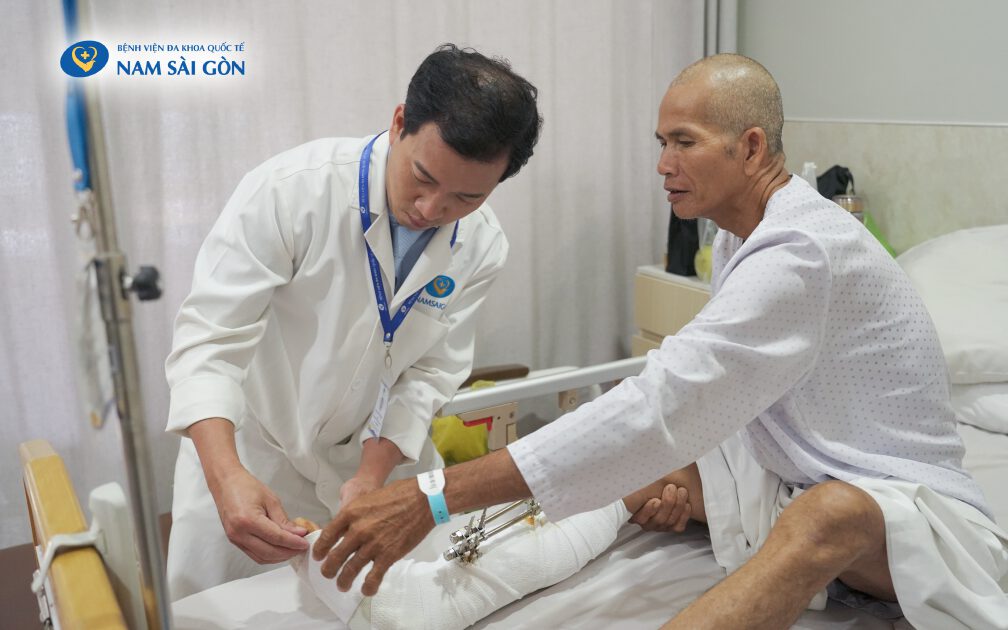
A sudden accident struck 61-year-old Mr. C.K when he collided with a lawnmower, causing a large section of his right foot to be cut open with severe bleeding. After receiving temporary first aid at a local hospital, he was urgently transferred to Nam Sai Gon International General Hospital for emergency treatment that same night in hopes of saving his life.
Dr. Son Tan Ngoc (Specialist Level I)—the physician directly treating the patient—shared:
“The patient arrived in the Emergency Department with severe trauma to the right leg, including a large open wound, deformity, significant blood loss, and complete transection of the vascular–nerve bundle and the anterior tibial tendons and muscles—critical structures responsible for blood supply and movement of the foot. The injury was classified as a severe open fracture. Without timely and appropriate intervention, the patient faced a high risk of losing foot function or even requiring amputation to preserve his life.”
The orthopedic trauma emergency team immediately took advantage of the “golden window—the first 6 hours” to perform emergency surgery, including: debridement to remove crushed tissue and prevent infection; application of an external fixation frame to stabilize the fracture—an approach that keeps bone structures aligned without deep intervention into the damaged area, supporting healing; and microsurgical repair of the anterior tibial artery, nerve, and tendon to restore blood circulation, sensation, and potential future mobility of the foot.
The key to the surgery was the microsurgical technique used to reconnect the anterior tibial artery and nerve—a process requiring exceptionally high surgical expertise, meticulous precision, and the support of advanced instruments.
“We used a high-magnification surgical microscope to reconnect blood vessels only 1–2 mm in diameter. This was the determining factor in whether the severed foot could regain blood supply and be salvaged,” explained Dr. Son Tan Ngoc.
After more than three hours of surgery, the team successfully reconnected the blood vessels, nerves, and tendons, preserving the patient’s limb to the greatest extent possible. They maintained the full length of the leg, ensured adequate blood flow, and restored sensation and mobility potential for the patient. Additionally, anesthesiology and intraoperative monitoring played an essential role in keeping the patient stable throughout the procedure.
Detecting a hidden kidney injury following the unexpected accident
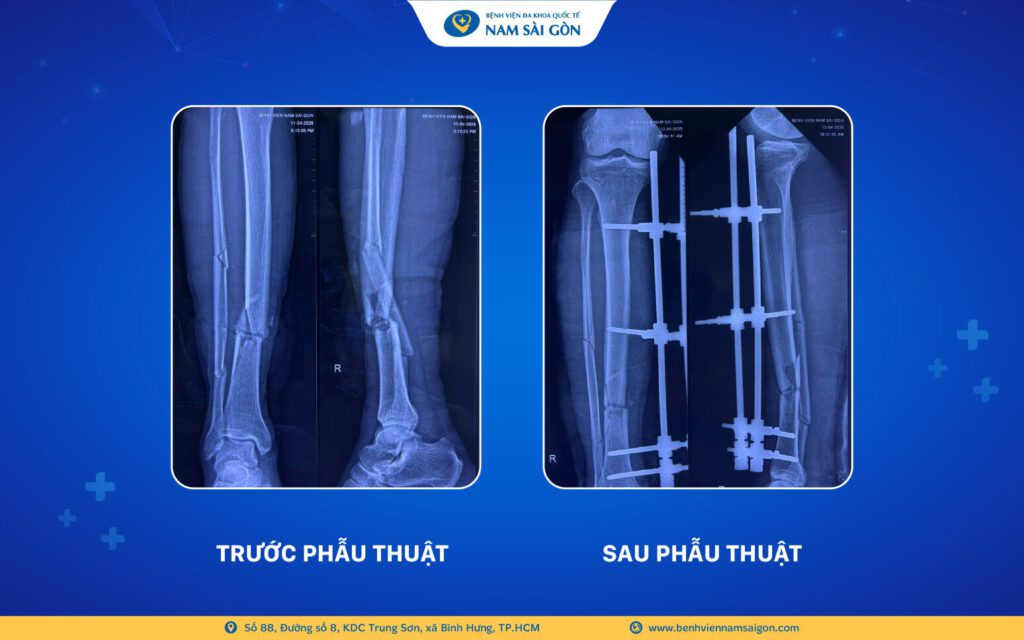
The remarkable aspect of this case extended beyond the successful limb-saving surgery. During a comprehensive assessment for associated injuries, the medical team discovered that Mr. K. had signs of right kidney stones caused by ureteropelvic junction (UPJ) obstruction—a condition in which urine cannot flow from the kidney to the bladder, leading to hydronephrosis and increasing the risk of infection, renal parenchymal damage, and even kidney failure if not diagnosed and treated promptly.
Just three days after the microsurgical repair of his lower-limb artery, once his condition had stabilized, the surgical team led by Dr. Le Van Hieu Nhan (Specialist Level II), General Surgery, performed a procedure that included pyeloplasty (reconstruction of the ureteropelvic junction) and kidney stone removal.
The urology team selected the technique of intrarenal pelvic incision to retrieve the stone. A skin incision of approximately 10 cm was made along the rib area, allowing precise access to the stone while thoroughly addressing the root cause of the obstruction—the narrowed ureteropelvic junction.
As a result, the 1.4 mm stone was successfully removed. The ureteropelvic junction was reconstructed to ensure smooth urine flow from the kidney to the bladder, helping prevent stone recurrence and safeguarding long-term kidney function.
“Early detection and timely management of both conditions not only enabled the patient’s full recovery but also prevented dangerous silent complications that might otherwise have gone unnoticed for years,” Dr. Nhan shared.
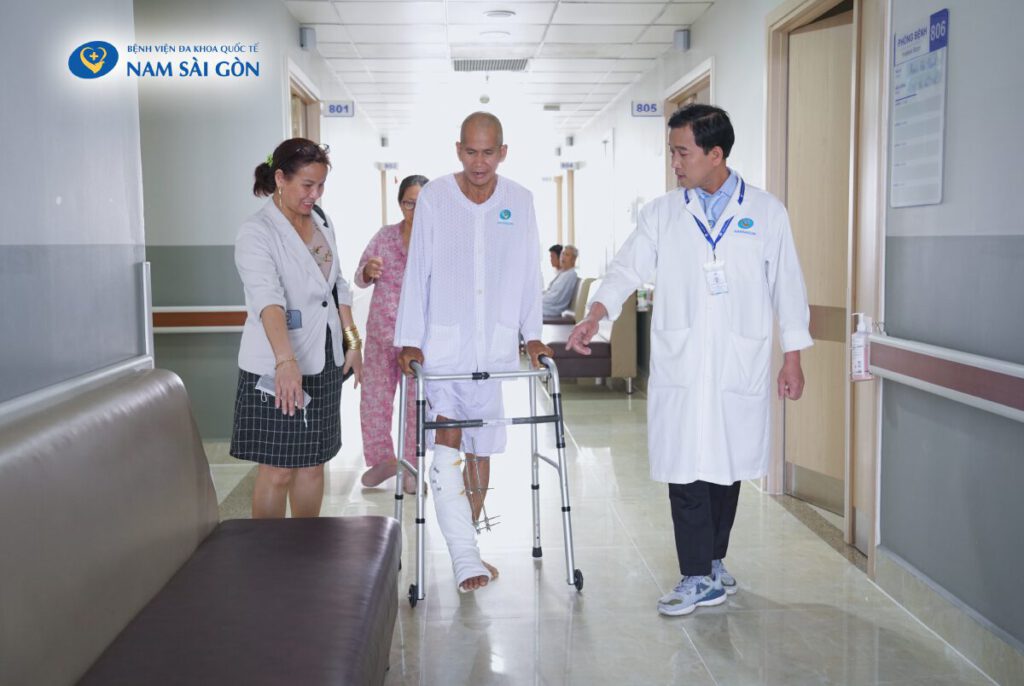
After approximately two months of intensive treatment and four comprehensive surgical procedures, the patient’s condition has significantly stabilized. Postoperative monitoring indicators all show positive progress. The foot is healing well, with clean, dry wounds and no signs of infection. Kidney function has improved, with urine flowing normally and no remaining hydronephrosis.
Multidisciplinary coordination – The key to detecting and effectively treating hidden medical conditions
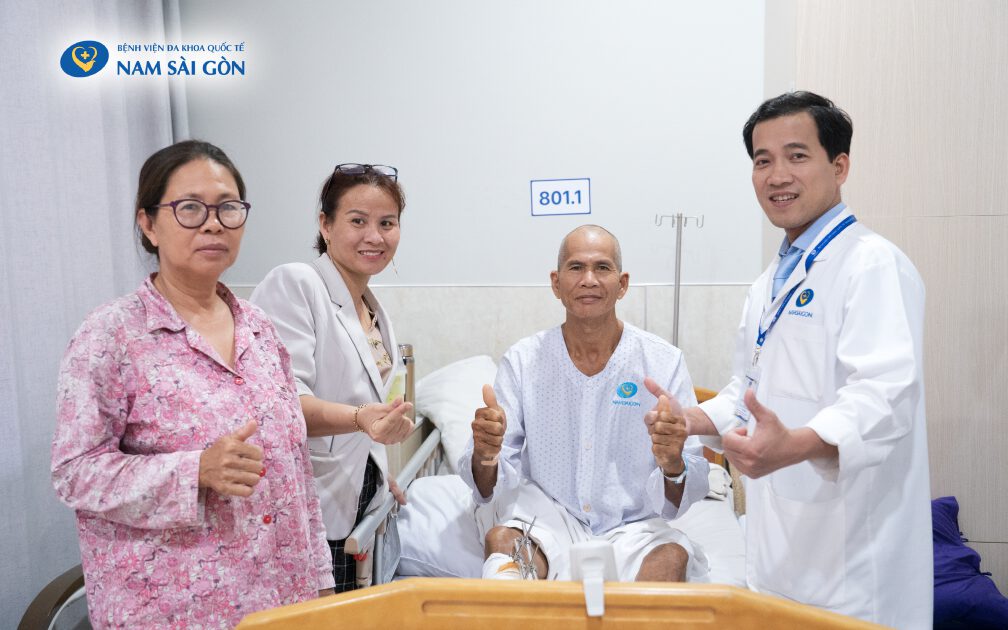
This case serves as a clear example of the vital role played by the multidisciplinary care model at Nam Sai Gon International General Hospital. Had the team focused solely on treating the initial trauma and overlooked other warning signs, the patient could have lost the opportunity for timely detection and treatment of dangerous underlying conditions such as ureteral obstruction, kidney stones, or impaired renal function.
This reflects the hospital’s consistent treatment philosophy: Comprehensive – Personalized – Prioritizing the patient’s long-term well-being.
Nam Sai Gon International General Hospital is a trusted destination for multidisciplinary medical examinations, integrated with modern technology to support early detection and effective treatment of complex conditions. With a team of leading specialists and advanced medical equipment, the hospital not only meets the demand for high-quality healthcare for domestic patients but is also fully prepared to provide care for international patients.
Nam Sai Gon International General Hospital
No. 88, Street No. 8, Trung Son Residential Area, Binh Hung Commune, Ho Chi Minh City.
Hotline: 18006767
info@nih.com.vn
Last updated: 13:48 04/02/2026